About us
SIRIUS stands for “Wireless communication and advanced signal processing: A deep tech group for research and innovation.” Sirius is the brightest star in the night sky. Its name is derived from the Greek word Σείριος (Latin script: Seirios), meaning lit. ‘glowing’ or ‘scorching’. The group was established in 2023 and consists of university professors, researchers, postdoctoral researchers, PhD candidates, and master’s students. The members of SIRIUS belong to different organizations, i.e., Democritus University of Thrace, Athena Research Centre, National Hellenic Research Foundation, National Technical University of Athens, and University of Thessaly, creating a research consortium of diverse expertise, knowledge, and infrastructure. The multi-disciplinary nature of SIRIUS allows the group to deal with practical and complex problems and provide out-of-the-box solutions.

Research areas
The current research interests of the SIRIUS research group are:


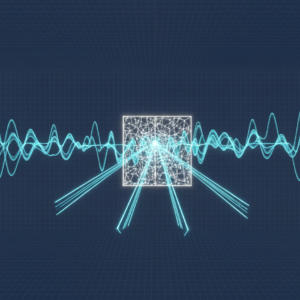

Integrated COMPUTING, communication and Sensing




Our expertise
Requirements analysis & wireless systems specification definition
As the wireless world moves forward, new applications are designed, which require redefinition of the wireless system requirements. Our team translates the application requirements to wireless link and system level requirements. The key performance indicators include data rate, coverage, reliability, availability, massive connectivity, transparency, etc. as well as a number of key value indicators, like sustainability, time to market, installation time, etc. A correct and accurate definition of the system requirements is crucial for the wireless system definition.
Wireless system and network architecture design
New technologies coming from material sciences and new concepts like pencil-beamforming, drone-empowered or assisted communications, and high-frequency (mmWave, THz, and optical) technologies, require the redefinition of conventional cellular radio-access architecture with fully-orthogonal research blocks to cell-free non-orthogonal wireless systems. Meanwhile, the opportunity of bringing the fibre quality of experience in the wireless world opens the door to a number of novel system models. Transforming wireless network into processing platform of profound energy efficiency, openness capable of operating in harsh electromagnetic environments, and thus allowing democratisation of the internet is one more topic that the SIRIUS research group is working on.
Electromagnetic analysis & advanced material design
Next generation communications are evolving as a highly multi-disciplinary field, in which new artificial materials with extraordinary electromagnetic properties play a key role. Creating electromagnetic models that accurately map the properties of these materials and translate them in comprehensive signal model by the communication world is of high interest. Another key challenge is to include the stochastic nature of several phenomena to the aforementioned models. Such phenomena includes blockage, misalignment, hardware imperfections, etc. In this direction, the SIRIUS research group designs and tests novel methodology that combines the determinist electromagnetic and the stochastic signal modeling worlds.
Wireless channel, signal, system modeling and system architecture definition
Unconventional communication systems operating in harsh environments, such as nano or micro-scale communications, communications for biomedical applications (e.g. transdermal or in-body communications), underwater, or satellite as well as out-of-earth communications requires rethinking of conventional channel, signal, and systems models. Moreover, the adaptation of high-frequency communications as well as the use of meta-materials/metasurfaces with static or dynamic configurations demand the formulation of new system models and wireless network topologies. The SIRIUS research group leverages on its members experience in electromagnetic, channel, signal, and system modeling and provides the appropriate methodologies and approaches to achieve the above goals. Finally, the SIRIUS research group is working on developing high-frequency (mmW, THz or even optical) ray tracing simulations.
Baseband and optical signal processing
Designing channel estimation and synchronization as well as analog, digital and hybrid beam former codebooks, diversity approaches, transceivers hardware imperfection mitigation schemes, beam tracking techniques, and modulation schemes, as well as (self-) interference mitigation approaches is another domain that the SIRIOUS research group has extended expertise. Moreover, the group is working on optical signal processing exploiting analog signal processing methodologies in order to enable beyond state-of-the-art concepts.
Waveform design
To make the most out of the propagation medium, while ensuring high-levels of reliability and resilience is a topic of significant importance. SIRIUS has an important experience in analyzing the propagation medium characteristics and inherent particularities and developing or optimizing existing waveform designs. A key constraint that we account for in all our designs are the technology barriers, i.e. hardware constraints. To counterbalance them, we build upon the multi-diverse nature of our group and co-design the software and hardware of the waveform generation module.
Performance analysis and assessment of wireless systems
Finding the performance bounds and providing engineering insights. and guidelines is a fundamental goal of the SIRIUS research group. In this direction, we build upon well-defined device, channel and system models, we define the mathematical expressions of key performance indicators (KPIs) and we provide analytical methodologies, exact formulas, approximations, and/or bounds for their quantification.
Optimization and adaptation of wireless systems
This includes medium access control mechanisms and resource management policies design. Conventional approaches include the formulation of low-complexity optimisation problem, manipulating them in order to prove their convexity or bringing them in a convex optimisation form, and solving them using analytical mathematical methodologies. However, as we move towards high-frequency communications and employ advanced electromagnetic materials and interfaces, physical constraints from the propagation environment as well as particularities of the resource blocks, such as their quantised nature, need to be accounted for. In most case, the solutions are not In the continuous one-dimensional space, but in a quantised two to six dimensional space. To counter-balance this, advance optimization theoretical methodologies need to be leveraged, as well as new tools coming from machine learning (ML) and artificial intelligence (AI) domains. Finally, to provide real or almost-real time adaptability and thus boost the wireless system and network reliability, on the “blink of the eye” adaptation policies that are usually based on transfer learning and/or reinforcement learning, need to be employed. In this direction, the SIRIUS research group leverages its experience and multidisciplinary nature and formulates realistic optimisation problems for resource block allocation, user/device association, power management, etc. that account for the underline technology particularities and the propagation medium characteristics, provides solutions that consider the current hardware limitations, and tests them through simulations, as well as in-lab and real-world testbeds and pilots. Finally, the SIRIUS research group leverages metaheuristic approaches in order to extract the appropriate datasets for training AI models.
Physical and data layers protocol design
A physical layer protocol is a set of rules that governs data transmission between wired and wireless devices. It includes the set of constellations, beamforming and MIMO approaches, channel combining rules and principles, the resource blocks (including channels) that can be used for transmission, etc. As we move to higher frequency band, the heterogeneity of radio access technology calls for new physical and data layer designs that enables a set of new type of functionalities, like integrated communication and sensing, energy harvesting, and power transfer, spectrum aggregation, on-the-fly computing and buffering, etc. SIRIUS capitalizes on its multidisciplinary nature to co-design physical and medium access control schemes that account for the particularities of the radio access technologies and the enabling concepts.
Physical layer security & privacy
Physical layer security is expected to find application in high-directional high-frequency wireless systems that can guarantee that the legitimate channel has greater capacity compared to the eavesdropping channel. In this direction, we leverage on optimization theory, random matrix theory, stochastic geometry and as well as statistics and probability theory to analyze the feasibility of physical layer security and privacy in different system models as well as extract the security bounds. Moreover, we design beamforming codebooks with codewords that maximize the physical layer security and privacy with compromising neither the reliability or the energy efficiency of the wireless systems. Additionally, SIRIUS works on the coding design. and development of waveforms that maximize the secrecy capacity of wireless systems. Finally, approaches that exploit advanced reconfigurable materials to maximize the secrecy capacity of the system are in the scope of SIRIUS.
Native AI and machine learning for wireless systems
AI advancements have significantly impacted 6G networks, with real-time AI expected to support distributed learning with high spectral efficiency and low latency. This will enable the interchange of data and model parameters across numerous intelligent agents, ensuring native trustworthiness and local data privacy. AI can alleviate the cost and manpower load of mobile networks, enabling zero-touch network orchestration and operation through predictive network analytic services and end-to-end system automation. The production of software in 6G networks evolves into a data coding paradigm, utilizing AI algorithms to construct deep neural networks (DNNs) for distributed learning and inference applications. This enables real-time and large-scale inference requirements for society and vertical businesses. Mobile communication networks will transform into platforms with integrated connectivity and computing capabilities, supporting AI services with fast learning convergence. Next generation mobile communication networks will generate, collect, and distribute vast amounts of data for orchestration and automation network services. However, the extended use of AI may compromise the energy efficiency of the network. In this direction, SIRIUS works on assessing the energy footprint and training latency of AI and machine learning approaches, as well as co-designing and integrating AI and AI-acceleration solutions in wireless systems and networks.
Signal processing and wireless system design for biomedical applications
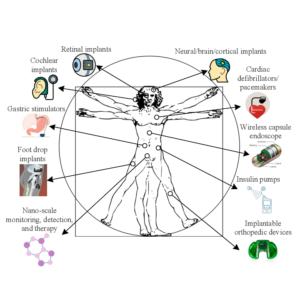
Moving to nano-scale applications opens an entirely new domain for communication engineers. Understanding the particularities, setting the communication constraints (with an eye on safety), and modeling this unexplored domain are some of the key goals of SIRIUS. Our group wants to go a step further by building upon the system model that it creates in order to develop prototypes that improve the quality of life of humans. In this direction, we steer our attention towards biomedical application, developing pioneer concepts, like all-optical implants, as well as studying, designing and developing nano-scale robotic networks.
Digital twins for wireless systems and networks
Digital twins are expected to become the basis for proactive adaptation and AI model training in next-generation wired and wireless systems and networks. Motivated by this and building upon the group’s expertise, in SIRIUS, we design novel approaches to develop digital twins. In more detail, a holistic methodology is used, starting from information that we capture by integrated sensing and communication approaches, as well as information that is collected by O-RAN and can be translated into communication/network-tailored characteristics.
Proof-of-concept and testbeds development
To verify theoretical findings,, simulation results, and/or new approaches, or even to identify, assess performance gaps between theoretical findings and reality, SIRIUS designs and develops proof-of-concept testbeds.
Our team
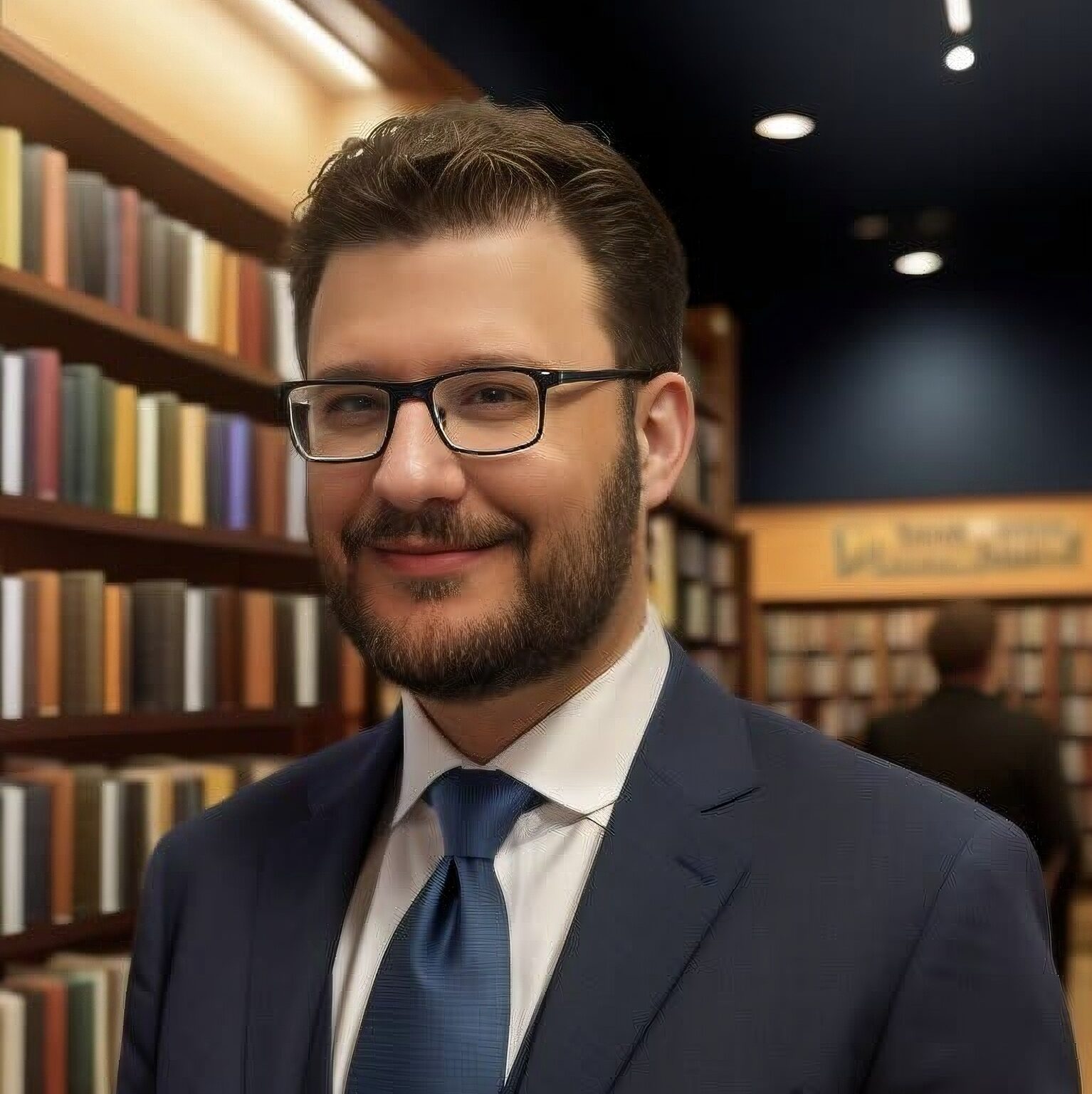
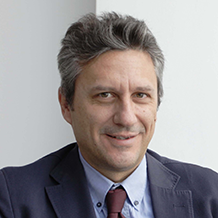
Alexandros-Apostolos A. Boulogeorgos
Associate Professor
Department of Electrical and Computer Engineering, Democritus University of Thrace
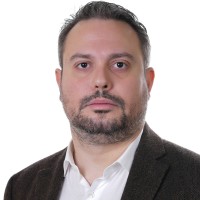
Theodoros Tsiftsis
Professor
Department of Informatics & Telecommunications,
University of Thessaly
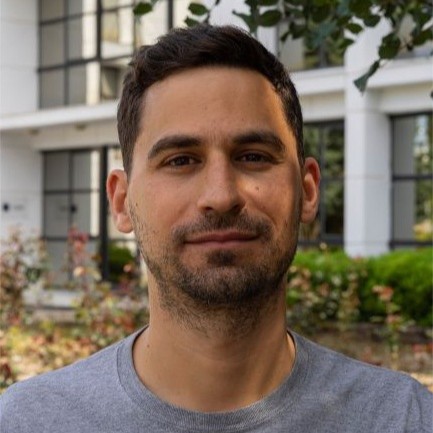
Constantinos Valagianopoulos
Assistant Professor
Department of Electrical and Computer Engineering,
National Technical University of ATHENS
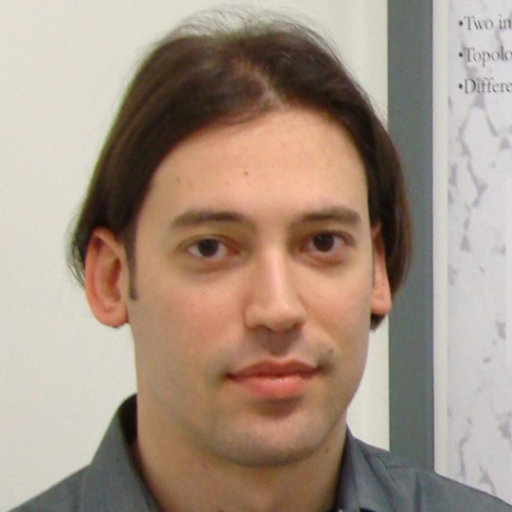
Odysseas Tsilipakos
ASSOCIATE Researcher
THEORETICAL & PHYSICAL CHEMISTRY INSTITUTE,
National Hellenic Research Foundations
Theofilos Chrysikos
Post-doctoral researcher
Department of Informatics & Telecommunications,
University of Thessaly

Alexandros Pitilakis
Post-doctoral researcher
Department of Electrical and Computer Engineering, Democritus University of Thrace
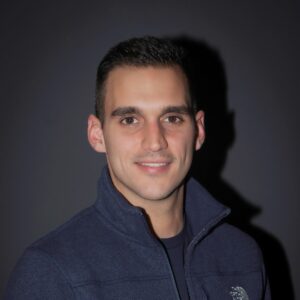
Stylianos Trevlakis
Post-doctoral researcher
Department of Informatics & Telecommunications,
University of ThessalY,
CEO @INNOCUBE IKE
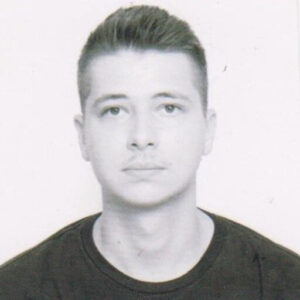
Athanasios Chrysologou
Postdoctoral researcher
Department of Electrical and Computer Engineering, Democritus University of Thrace
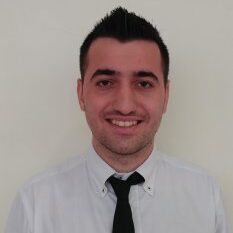
Ilias Chrysovergis
PhD Candidate
Department of Informatics & Telecommunications,
University of Thessaly,
CEO @METATOPIA LTD

Alexandros Katsios
PhD Candidate
Department of Electrical and Computer Engineering,
University of Western Macedonia
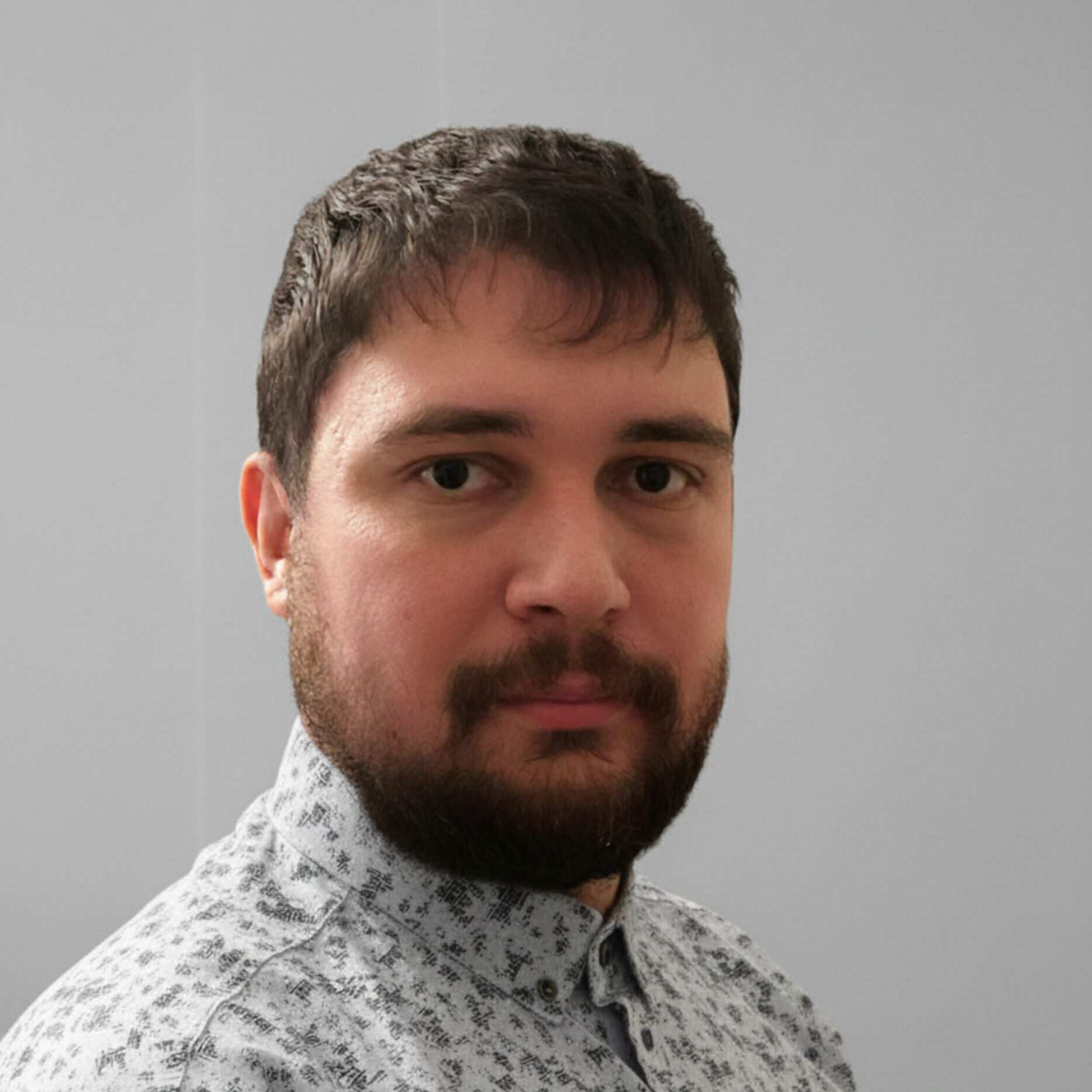
Evangelos Koutsonas
PhD Candidate
Department of Electrical and Computer Engineering,
University of Western Macedonia
Vasileios Kouvakis
PhD Candidate
Department of Electrical and Computer Engineering,
University of Western Macedonia

Aris Karampelas-Timotijevic
PhD Candidate
Department of Informatics & Telecommunications,
University of Thessaly
International past and current collaborations